Mapping Nepal’s Civic Tech and AI Landscape: Key Takeaways from the Digital Democracy Summit 2026

On 23 July 2026, Open Knowledge Foundation Nepal joined Speak Up Nepal to co-lead a parallel session titled “Civic Tech, AI and Accountability” at the Digital Democracy Summit 2026, held at Malla Hotel under the theme “Bridging Policy, Participation, and Innovation“. The Summit brought together 120+ participants from government, multilateral and diplomatic partners, INGOs, the private sector, civil society, youth groups, and media to examine what citizen engagement and government accountability look like as Nepal’s digital transformation accelerates.
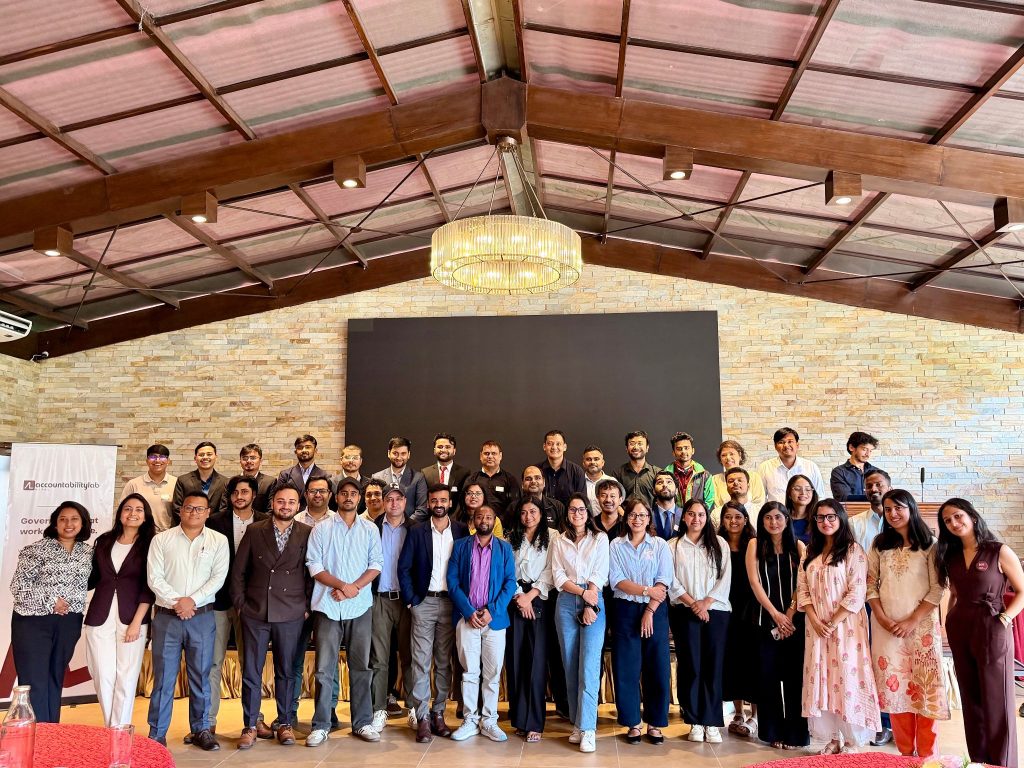
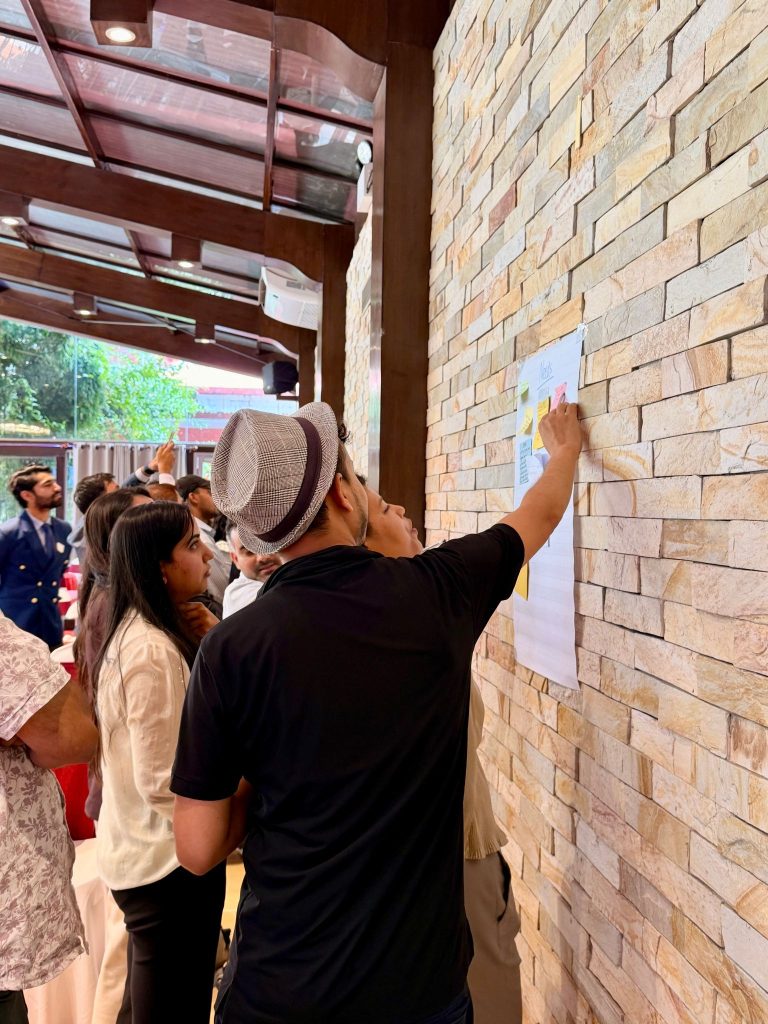
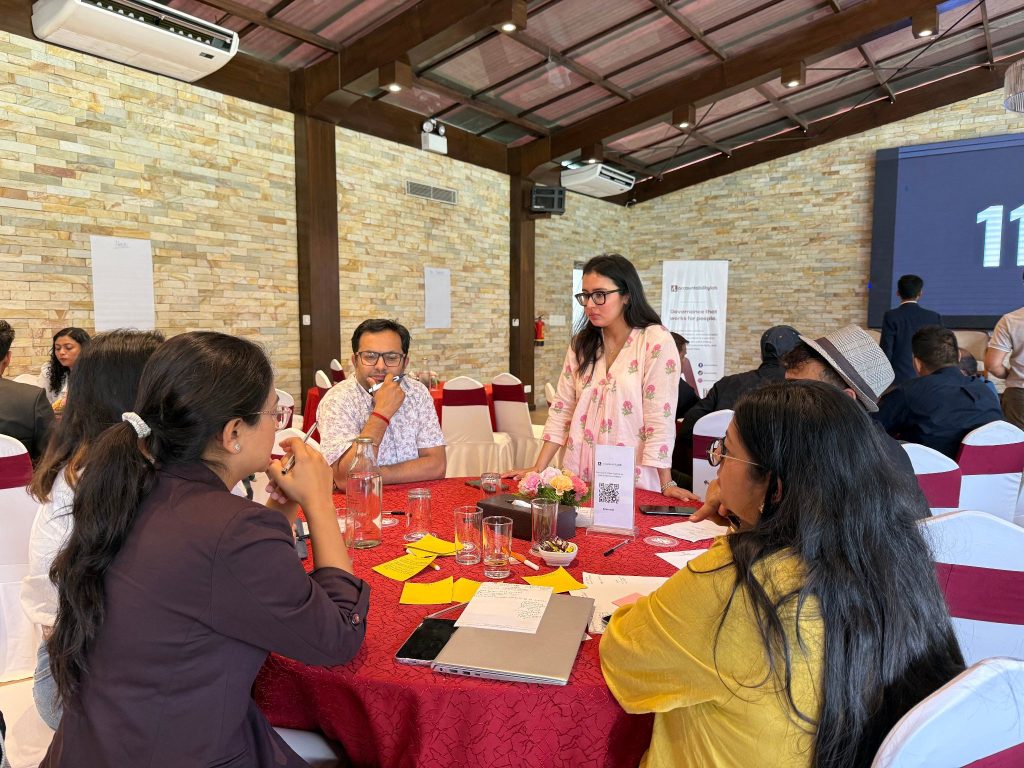
Our session took a deliberately hands-on approach. Rather than a conventional panel, participants worked through a structured, three-part process: a short framing on Nepal’s civic tech and AI landscape, an interactive small-group mapping exercise using chart paper and sticky notes, and a multi-stakeholder discussion where six sector lenses (government, development partners, private sector, civil society, academia, and media) examined the same findings from their own vantage points.
Below, we pull together the patterns that emerged.
Who is already in the room, and who needs to be
Participants identified a wide constituency already engaged in, or needed for, Nepal’s civic tech and AI ecosystem: youth groups, government bodies at multiple tiers, marginalized communities, cross-border and international organizations, civil society organizations, private sector and development partners, funding institutions, lawyers, engineers, policy experts, and environmentalists. The breadth of this list reflects a recurring theme from the session: civic tech and AI accountability is not a single sector’s job. It sits at the intersection of regulation, infrastructure, funding, and grassroots trust building, and progress depends on these groups coordinating rather than working in isolation.
Where the opportunities are
Groups pointed to a genuinely active funding and support landscape: the National Endowment for Democracy, GIZ, U.S Embassy, and democracy funds, alongside fellowship pathways such as Oxford and Stanford’s Fisher fellowship. Civic tech accelerators have grown more common, and government innovation challenges are creating space for new tools and partnerships.
Policy is also a source of momentum rather than only friction. Nepal’s National AI Policy 2025 sets job creation targets that could be linked directly to civic tech, and the Digital Nepal Framework signals clear government priorities and, participants noted, growing government willingness to fund innovation in this space. Emerging conversations on social media regulation, safe-use policy, data center development, and the creator economy were flagged as areas where the policy groundwork is starting to take shape, alongside a push for improved accessibility.
Where the gaps remain
The gaps identified were consistent across groups and fell into a few clear buckets.
- Policy gaps: Nepal still lacks a data protection bill and a cybersecurity bill. Where policies do exist, participants pointed to weak clarity, uneven implementation, and slow institutional adoption. Foreign direct investment processes were cited as taking roughly six months, a delay that discourages the kind of international investment civic tech ventures often need.
- Technology gaps: Data quality and ethical data use remain limited, cloud storage infrastructure is scarce, and AI language models are not yet accurate for Nepali, a barrier that affects everything from public service chatbots to content moderation tools.
- Institutional and structural gaps: Participants described institutional rigidity, unclear data sovereignty, uneven digital accessibility, and persistent challenges related to authenticity and stigma within academia around civic tech work. Awareness of existing policy and the will to implement it lagged behind the policies themselves.
What is needed to close them
The needs participants surfaced map directly onto the gaps above. They called for a business-friendly ecosystem with real access to capital for civic tech entrepreneurship, dedicated think tanks focused on civic technology, and stronger data governance and data security policy paired with proper digital infrastructure. Several groups proposed a coordinating body, potentially AI-powered, to align the many institutions already active in this sector rather than leaving them to work in parallel.
Beyond policy, the needs were also practical: stronger ICT infrastructure, a skilled workforce, financial resources, sustained digital literacy advocacy, and more opportunities for government representatives to gain international exposure to how other countries are approaching similar reforms. Several participants also called for a higher-level commission dedicated to technology reform, reflecting a sense that current efforts, while genuine, are too fragmented to drive systemic change.
Ideas participants want to see built
The session’s most energizing output was a long list of concrete ideas for what accountable civic tech could look like in practice. These included open government tools and more affordable digital access to government hospital services, e-learning platforms, AI-enabled government applications designed for persons with disabilities, and a UPI-like digital payments infrastructure for Nepal. Participants also proposed extending the Nagarik app to support smartphone-based voting, building a centralized platform consolidating legal information and rights protections in plain language, and creating grievance-handling mechanisms for responsible media practice.
A recurring thread across these ideas was reducing Nepal’s digital divide, particularly the gap between rural and urban access, and translating dense legal and policy language into forms ordinary citizens can actually use and act on.
Where this goes next
The mapping exercise and stakeholder discussions from this session fed directly into the Digital Democracy Summit’s closing plenary. For Open Knowledge Foundation Nepal, the session reaffirmed something we see across our work on open data and civic technology: the opportunities, funding, and policy signals in Nepal’s civic tech and AI space are real, but they will only translate into accountability gains if the policy, infrastructure, and coordination gaps identified here are addressed with the same energy the sector’s supporters are bringing to it.
We thank Speak Up Nepal for co-leading this session, and all the participants who contributed their time, expertise, and sticky notes to this mapping exercise.