When Access Isn’t Enough: Digital Inclusion Lessons from Dhangadhi

Lessons from the Empowering Local Enterprises through Digital Roadmaps program on digital inclusion, safety, and what it means to participate in Nepal’s digital future.
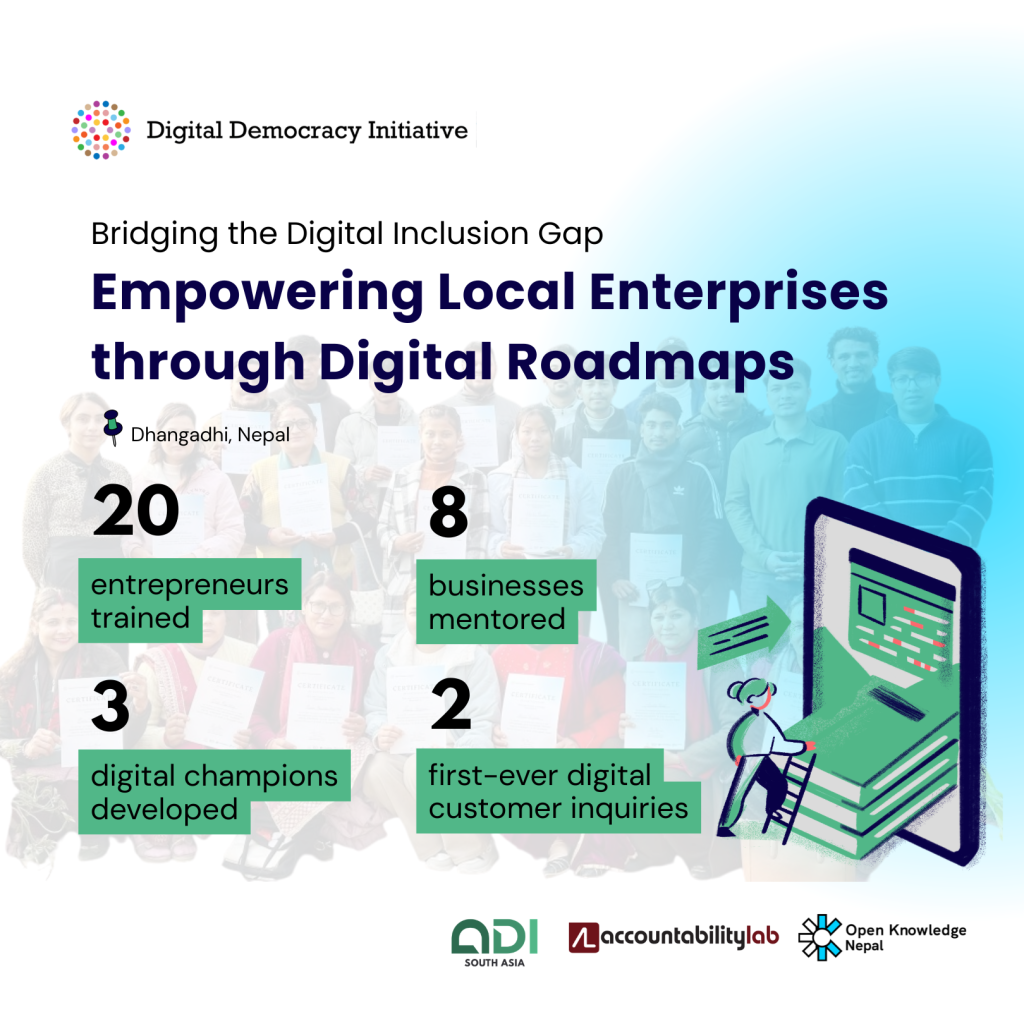
We went to Dhangadhi expecting to find entrepreneurs who lacked access to digital tools. What we found instead were people who already had smartphones, already used the internet every day, and had simply never had anyone sit down with them and say: “Your business belongs online too“.
That distinction between having access and being included is at the heart of what the Empowering Local Enterprises through Digital Roadmaps program set out to address. Over one month in early 2026, Open Knowledge Nepal trained 20 local micro-entrepreneurs in Dhangadhi and provided hands-on digital mentorship to 8 businesses. This is what we learned.
The gap nobody talks about
Nepal’s digital inclusion conversation is dominated by infrastructure: broadband coverage, device availability, and rural connectivity. These are real issues in many parts of the country. But in Dhangadhi, they were not the problem.
Our baseline assessment showed participants using smartphones daily for Facebook, TikTok, YouTube, and messaging. The internet was already in their hands. What was missing was the bridge between scrolling and doing, between being a consumer of the digital world and being an active participant in it.
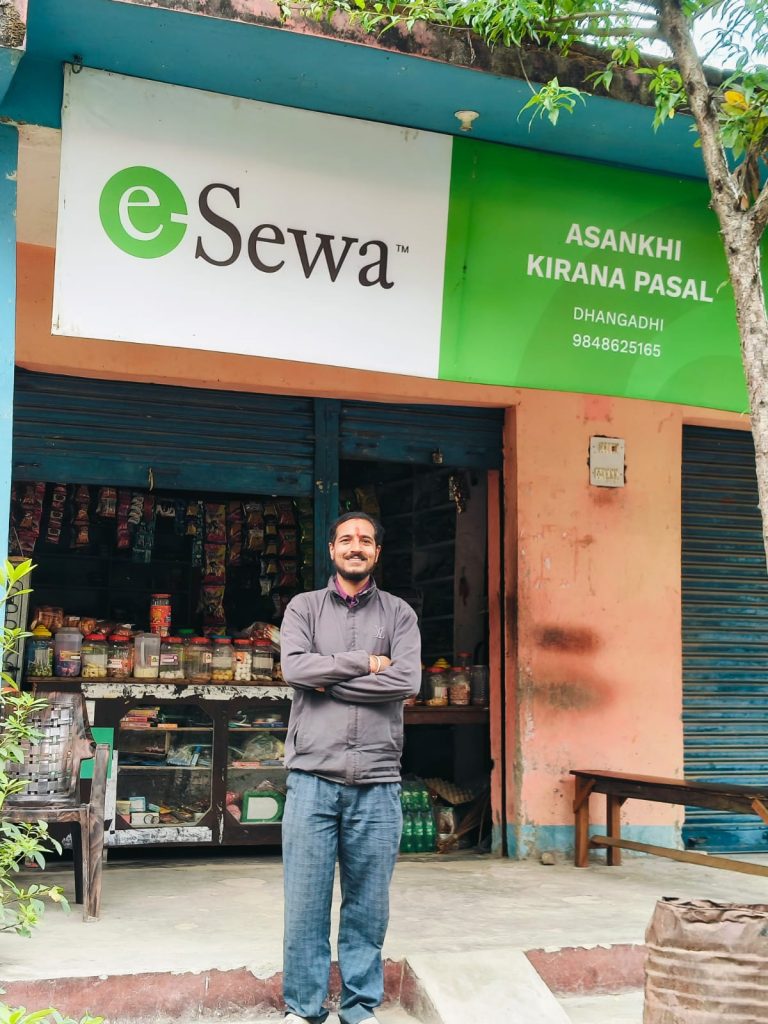
“I had Facebook on my phone for years. But I never thought of it as a tool for my business. I did not know where to start.” – Devraj Awasthi, Training Participant, Dhangadhi
Five barriers came up consistently across sessions and assessments: low confidence despite reasonable awareness; no trusted local guide when things went wrong; anxiety about online scams with no clear path for redress; the practical challenge of creating content; and real uncertainty about whether selling online was even legal for an informal business.
None of these are connectivity problems. All of them are solvable, with the right support.
What happened when we showed up
The training was two days. The mentorship that followed was three to four weeks of on-site visits from youth volunteers, working directly with entrepreneurs on their phones and their businesses.
By the end of the program:
- All 8 mentored businesses had a Facebook page and Google Maps listing, most for the first time
- 5 businesses were actively posting content online
- 2 businesses had received their first-ever customer inquiry through a digital channel

Min Raj Chaudhary, a fish farmer from Krishnapur, Kanchanpur, previously relied entirely on word of mouth and local networks, with no online presence for his business. After participating in a 2-day digital training followed by post-training mentorship, he began to shift this approach. The training introduced him to the importance of taking his business online, maintaining good digital practices, and developing a clear plan for growth. During this phase, he created a structured Digital Roadmap tailored to his business needs. The post-training mentorship focused on turning this plan into action through hands-on support. He set up his first Facebook page, established a Google Maps location for his business, and learned to use AI tools to create engaging content.
As a result of these efforts, he has already started seeing tangible outcomes, including receiving a business inquiry through a video he posted on Facebook, marking his first step toward digital visibility and growth.
Digital safety: building the confidence to navigate online
Before the training, most participants had real anxiety about using digital tools for business, particularly around payments. Many had heard of or witnessed scams, and without any framework for understanding online risks, the natural response was to avoid these tools altogether.
“I was afraid to use eSewa for business. What if someone cheats me? Who do I complain to?” – Pre-training Assessment Participant
A dedicated session on digital safety covered password hygiene, identifying fraudulent requests, safe use of payment platforms, and protecting personal information. It was one of the most valued parts of the training. Post-training assessments showed a clear shift: participants moved from limited awareness to a stronger understanding of online safety practices and the ability to identify common scams.
This did not just reduce anxiety. It gave participants the practical vocabulary and confidence to engage with digital tools more actively, rather than steering clear of them. Digital safety, in this context, is not a standalone topic. It is the foundation that makes everything else possible. An entrepreneur who does not trust digital payments will not use them. One who cannot identify a fake buyer request will not risk selling online. Building that foundation was essential to the broader goal of digital adoption.
Recognizing that digital safety confidence takes time to build, OKN remains available to participants beyond the program period. The youth volunteers who worked directly with entrepreneurs during the mentorship phase continue to serve as local points of contact, a familiar, trusted resource entrepreneurs can turn to when they encounter unfamiliar situations online. This peer support layer is a deliberate part of how the program is designed to build a lasting digital safety ecosystem at the community level, rather than delivering a one-time training and stepping away
Connecting with local government: the beginning of a bigger conversation
The program was always intended to do more than train individual entrepreneurs. One of its goals was to explore how local government could play a more active role in supporting digital inclusion, and the closing showcase event provided the first concrete opening for that conversation.
Ward Representative Jug Ram Chaudhary from Ward 8, Dhangadhi Sub-Metropolitan City, attended the event and engaged directly with participating entrepreneurs and the program team. The discussion went beyond celebrating outcomes. Representative Chaudhary expressed that he was genuinely impressed by the potential of digital participation and the scalable impact it could have on local entrepreneurs. He noted that as part of giving back to entrepreneurs who are registered and actively running businesses, the local government should consider providing institutional support, because stronger digital practices, he observed, have a direct bearing on the local economy. Most notably, Representative Chaudhary indicated that he would look into incorporating digital training for entrepreneurs as part of the local government’s budget discussions. He also expressed interest in consulting directly with the youth volunteers from the program, seeing their youth-led mentorship model as something worth exploring for wider ward-level implementation.
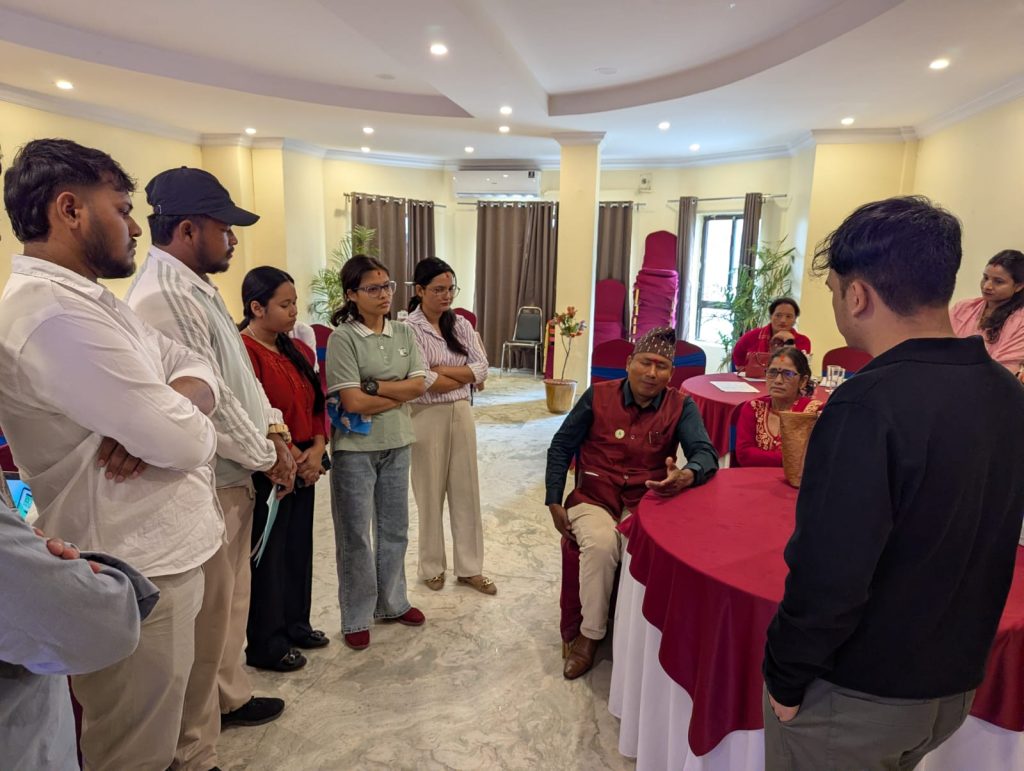
The discussion also touched on what a more sustained collaboration might look like, including the possibility of the local government supporting future training initiatives and using digital tools to communicate more effectively with citizens.
This remains an early-stage conversation, not a formal commitment. But it reflects something important: when local government sees the outcomes of a program like this, entrepreneurs with new digital skills, businesses with an online presence, and a ready community of locally rooted digital volunteers, the case for institutional involvement becomes easier to make. Digital inclusion does not have to be a donor-funded intervention. It can be a local government service.
A policy environment that has not caught up
Nepal is investing significantly in its digital future. The $90 million Nepal Digital Transformation Project, supported by the World Bank and Asian Development Bank, is the largest coordinated digital investment the country has seen. National frameworks like the Digital Nepal Framework 2.0 and the Sixteenth Periodic Plan set ambitious targets. On paper, the direction is right.
But the entrepreneurs we worked with in Dhangadhi barely appear in any of it. Nepal’s digital policies are largely built around infrastructure, IT exports, and formal businesses. They have not yet made room for the micro-entrepreneur using Facebook Marketplace to sell her products, the fish farmer trying to understand whether he can legally take orders on WhatsApp, or the small business owner who wants to report an online scam but cannot find a reporting channel in Nepali outside of Kathmandu.
The question our participants kept asking was not about bandwidth or devices. It was about trust, rights, and recourse. Who protects me if I am cheated online? Can I legally run my business this way? Is there anyone I can call? These are basic questions that any entrepreneur deserves answers to, and right now, Nepal’s digital policy framework does not have clear answers for people in their situation. Closing that gap, by making digital safety resources accessible, by recognising informal digital sellers in consumer protection guidance, and by giving local governments a clear mandate to support digital inclusion, is the next step this work points toward.
A model worth scaling, if policy moves with it
The Digital Roadmap Program is small: 20 entrepreneurs, one city, three months. But it is evidence that the barriers are surmountable. The Digital Roadmap Toolkit is open-access, the youth mentor model is low-cost, and the methodology is replicable. What it cannot do alone is change the policy environment that makes digital inclusion an add-on rather than a right.
Nepal’s digital policies are ambitious. What they consistently overlook is the person at the edge of the system. The woman selling handicrafts on Facebook who does not know her consumer rights. The fish farmer who cannot find a cybercrime reporting number in Nepali. The ward representative who wants to support digital inclusion but has no framework to do so.
The entrepreneurs of Dhangadhi already have the devices, the motivation, and, with the right support, the skills. What Nepal’s digital future needs now is policy that reaches them where they are.